LIC 603A: Resident Appraisal
LIC 603A is the facility's resident appraisal of a resident's abilities, needs, and level of functioning. It helps the facility understand what the resident can do independently, where assistance may be needed, and what should be considered when developing the Needs and Services Plan.
What Is LIC 603A?
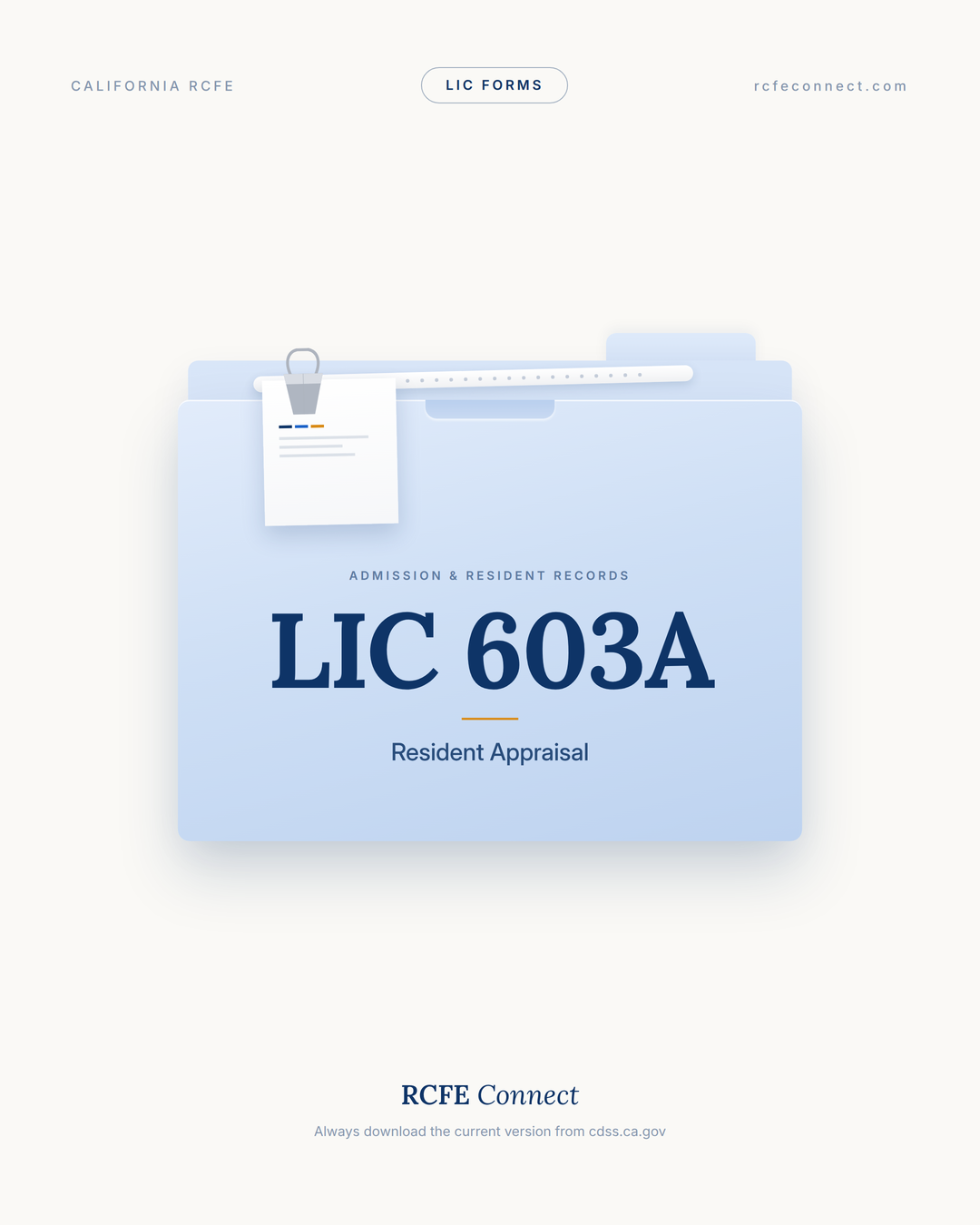
LIC 603A, Resident Appraisal, is used by the facility to assess a resident's abilities, needs, and level of functioning.
The appraisal helps the facility document areas such as the resident's ability to perform daily activities, mobility, personal care, cognitive functioning, and behavior.
For RCFE owners, the goal is simple: create an accurate picture of what the resident can do, where they need assistance, and what services they may require.
Official LIC 603A Form
The current LIC 603A is published by the California Department of Social Services (CDSS). RCFE Connect links directly to the official source rather than hosting a copy, so you can access the form from CDSS.
[Open LIC 603A on CDSS]
Who Completes LIC 603A and When?
LIC 603A is completed by the facility, typically by the administrator or a designated staff member responsible for conducting the resident appraisal.
The appraisal should be based on information gathered from the resident, family or responsible parties when appropriate, and the facility's observations of the resident's actual abilities and needs.
The appraisal is completed as part of the resident's admission and assessment process. It should also be reviewed when there is a significant change in the resident's condition or level of functioning.
What Information Is Included on LIC 603A?
LIC 603A covers different aspects of the resident's abilities and care needs, including:
Resident's functional abilities
Mobility and physical functioning
Ability to perform personal care activities
Ability to eat and manage toileting needs
Cognitive and memory functioning
Communication abilities
Behavioral needs
Level of assistance required
Other information relevant to the resident's care and supervision
Information that can be used when developing the resident's Needs and Services Plan
How to Complete LIC 603A
1. Review the resident's available information
Review the resident's relevant records and information before completing the appraisal.
Consider the information available from the resident's medical assessment, admission records, and other relevant documentation.
2. Talk with the resident and appropriate sources
Ask the resident about their routines, abilities, preferences, and the assistance they normally receive.
When appropriate, information from family members or responsible parties can also help provide a clearer picture of the resident's day-to-day functioning.
3. Assess the resident's abilities
Evaluate the resident based on what they can actually do and the level of assistance they require.
Consider areas such as mobility, bathing, dressing, eating, toileting, communication, memory, and behavior.
4. Document specific observations
Avoid relying only on general statements or checkbox answers.
When an explanation is needed, provide specific information about the resident's abilities and the assistance they require.
5. Use the appraisal to inform the Needs and Services Plan
The LIC 603A helps identify the resident's abilities and needs. This information should then be considered when developing or updating the LIC 625 Needs and Services Plan.
The two forms serve different purposes:
LIC 603A = What can the resident do and where do they need help?
LIC 625 = What services will the facility provide based on those needs?
6. Review and update when needed
A resident's abilities and needs can change over time.
Review the appraisal when there is a significant change in the resident's condition, such as a fall, hospitalization, change in mobility, or noticeable change in cognitive or behavioral functioning.
Common LIC 603A Mistakes to Avoid
A resident appraisal is most useful when it accurately reflects the resident's actual abilities and connects to the care the facility provides.
Watch for:
Inconsistent information The appraisal may conflict with the resident's medical assessment or other records without explaining the difference.
Checkbox-only documentation Ratings without useful observations may not clearly explain the resident's actual level of functioning or assistance needed.
Overlooking day-to-day abilities A diagnosis does not necessarily describe how much assistance a resident needs with every activity.
Failing to review after a significant change A fall, hospitalization, or noticeable change in condition may require the resident's needs to be reassessed.
Not connecting the appraisal to the care plan Information identified through the appraisal should be considered when developing or updating the resident's Needs and Services Plan.
LIC 603A Quick Check
Before filing or reviewing a LIC 603A, check that:
☐ Resident information is complete
☐ Relevant resident information has been reviewed
☐ Resident's functional abilities have been assessed
☐ Mobility and physical functioning have been considered
☐ Personal care abilities have been assessed
☐ Eating and toileting abilities have been considered
☐ Communication and cognitive functioning have been considered
☐ Behavioral needs have been considered
☐ Level of assistance is accurately documented
☐ Explanations are provided where needed
☐ Information is consistent with the resident's other records
☐ Significant changes in the resident's condition are reflected when applicable
☐ The appraisal has been considered when developing or updating the Needs and Services Plan
Frequently Asked Questions
Is LIC 603A the same as LIC 602A?
No. LIC 602A is the Medical Assessment completed by a licensed medical professional, while LIC 603A is the Resident Appraisal completed by the facility.
The LIC 602A focuses on the resident's medical condition, while the LIC 603A helps the facility assess the resident's day-to-day abilities and needs.
Is LIC 603A the same as the Needs and Services Plan?
No. The appraisal and the Needs and Services Plan serve different purposes.
LIC 603A documents the resident's abilities and needs.
LIC 625 documents the services and care the facility will provide based on those needs.
Who completes LIC 603A?
The facility completes the resident appraisal, typically through the administrator or a designated staff member responsible for assessing the resident.
When should LIC 603A be reviewed?
The appraisal should be reviewed when there is a significant change in the resident's condition, abilities, or care needs.
Examples may include a fall, hospitalization, significant change in mobility, or noticeable change in cognitive or behavioral functioning.
Why is LIC 603A important?
LIC 603A helps the facility understand the resident's actual abilities and care needs. It also provides information that can be used when developing or updating the resident's Needs and Services Plan.
More California RCFE LIC Forms
LIC 603A is one of many forms used in California's residential care system.
RCFE Connect is building a practical library to help facility owners understand what different LIC forms are for, when they are used, and what to check when completing them.
More LIC form guides coming soon.
Comments
Sign in with a family account to join the conversation.
Loading comments…